
Big Stone County Inmate Population
Big Stone County inmate population records come from the Sheriff's Office in Ortonville, a small town on the South Dakota border in western Minnesota. This rural county has a limited jail facility and sometimes contracts with neighboring counties to hold inmates when capacity is tight. The inmate population here tends to be small compared to metro-area jails, but the same state laws about public records and detention standards apply. If you need to find out who is in custody or look up past booking records in Big Stone County, you can contact the Sheriff's Office or use state search tools for inmates who have been sentenced to prison.
Big Stone County Overview
Big Stone County Sheriff
The Big Stone County Sheriff's Office is the main law enforcement agency in the county and manages the jail. Ortonville sits right on Big Stone Lake, which forms part of the Minnesota-South Dakota border. The office handles patrol, criminal investigations, and detention. With a small population, the sheriff's staff is modest compared to larger counties.
The jail has limited space. Big Stone County may send inmates to neighboring county jails when the local facility is full or when special housing needs come up. This is allowed under Minnesota Statutes Chapter 641, which covers regional jail agreements and cost-sharing between counties. Even when inmates are housed elsewhere, the Big Stone County sheriff still maintains the booking records. The original records stay with the county that made the arrest. Under Minn. Stat. 641.05, the sheriff must report inmate data to the courts and the Bureau of Criminal Apprehension no matter where the person is physically held.
| Office | Big Stone County Sheriff's Office |
|---|---|
| Location | Ortonville, MN |
| Emergency | 911 |
Finding Big Stone County Inmates
Contact the Big Stone County Sheriff's Office to ask about current inmates. Give them the person's name. Staff can check the local jail and let you know if someone is in custody. If the person was transferred to another county's jail, the sheriff's staff should still have that information on file.
For people serving state prison sentences, the Minnesota DOC Inmate Locator is your best tool. Search by name or DOC ID. The results show which facility holds the person and their custody status. This database covers everyone committed to the Commissioner of Corrections but does not include county jail detainees. The DOC Search Portal adds fugitive searches and the Minnesota Haven victim notification service. The Minnesota Judicial Branch website has court records that can show sentencing information for Big Stone County cases.
Public Records and Inmate Data
Big Stone County handles inmate population data under the Minnesota Government Data Practices Act. Arrest data is always public. That includes the person's name, age, sex, last known address, the charges, and details about the arrest itself. You do not need a reason to ask for this data.
Corrections and detention data gets more complicated. Under Minn. Stat. 13.85, data created because someone is in jail falls into public, private, and confidential categories. Medical and mental health records are private. Information that could put an inmate at risk stays confidential. Data presented in court becomes public to the extent it appears in the court record. Small counties like Big Stone handle fewer data requests than big ones, but the rules are exactly the same across the state.
Note: Big Stone County may contract with neighboring jails for housing, but the booking records stay with the Big Stone County Sheriff.
Detention Standards in Big Stone County
Even with a small jail, Big Stone County must meet all state standards for inmate care. Meals, medical attention, and communication access are required. Inmates must be classified and separated appropriately. Gender separation is mandatory under Minn. Stat. 641.14, and juveniles cannot be held with adults. Private companies cannot run the jail under Minn. Stat. 641.015.
When inmates are released from the Big Stone County jail, discharge planning kicks in. The jail must connect people with community services under Minn. Stat. 641.155. In a small, rural county, the available services may be more limited than in a city. But the legal requirement exists regardless. The Bureau of Criminal Apprehension receives arrest data from Big Stone County that feeds into the state's criminal history repository. This keeps statewide records consistent even for the smallest counties.
State Resources for Inmate Searches
The DOC publishes yearly statistics on inmate populations across Minnesota at mn.gov/doc/about/doc-statistics. These reports cover capacity, demographics, and trends. Victims can register for custody status alerts through DOC Victim Services. The 24-hour tip line for fugitives is 651-603-0026. Crime Stoppers of Minnesota at 1-800-222-8477 also takes tips.
Big Stone County's border location with South Dakota means some cases may involve cross-state issues. If someone committed a crime in Minnesota and fled to South Dakota, or the other way around, different systems track them. For Minnesota, stick with the DOC and BCA tools. South Dakota has its own corrections database. The county sheriff coordinates with both when needed.
Regional Jail Agreements
Small counties like Big Stone sometimes use regional jail agreements to house inmates. Minn. Stat. 641.261 through 641.266 allow counties to enter joint powers agreements for shared jail operations. This lets multiple counties split the cost of running a modern facility rather than each maintaining its own small jail. If Big Stone County sends inmates to a neighboring county's jail, the booking records still belong to Big Stone County. The sheriff here keeps the original data on file regardless of where the inmate physically sleeps.
The Minnesota Judicial Branch handles court records for Big Stone County through the 8th Judicial District. Criminal case information, sentencing orders, and probation conditions are available through the court system's online tools. These records connect to the inmate population data by showing the legal outcome of each arrest made in the county.
The Minnesota Statutes Chapter 641 governs county and regional jail operations across the state.
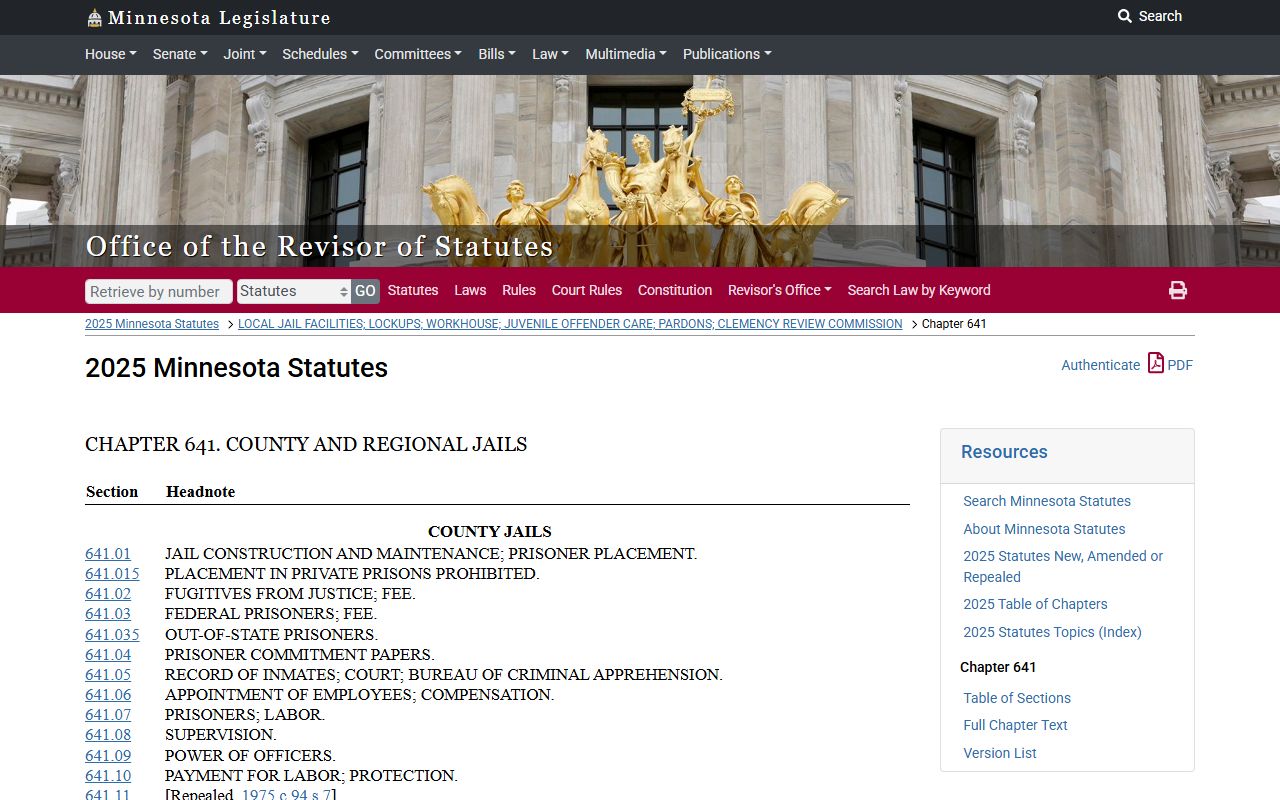
These statutes set the rules for how Big Stone County and every other county in Minnesota must operate their jails and maintain inmate records.
Nearby Counties
Big Stone County borders a handful of western Minnesota counties. Inmates from Big Stone may be housed in these neighboring jails.