
Search Minnesota Inmate Population
Minnesota inmate population records are kept by the state Department of Corrections and by each of the 87 county sheriff's offices. You can search for inmates held in state prisons through the free MN DOC Public Viewer tool. County jails post their own rosters and booking reports. Some update every 30 minutes. If you want to find someone in a local jail or state prison, the search tools on this page can help. Each county runs its own jail, and the state runs nine correctional facilities. Records include booking dates, charges, custody status, and release info. Start your search here to check inmate population data across Minnesota.
Minnesota Inmate Population Overview
Minnesota Inmate Population Search Tools
The main way to search Minnesota inmate population records at the state level is through the MN DOC Public Viewer. This tool lets you look up adults who have been committed to the Commissioner of Corrections. You can search by name or by MNDOC offender ID number. The system shows where someone is held, their custody status, release dates, and sentence info. It may take a few business days for new entries to show up after sentencing. The MN DOC Inmate Locator covers state prison inmates and those on supervised release. It does not show people in county jails who are waiting for trial.
The Minnesota Department of Corrections runs the state prison system from its main office at 1450 Energy Park Drive in St. Paul. The DOC Search Portal gives you access to several search tools in one place. You can look up incarcerated individuals, check for active DOC fugitives, and search the Level 3 predatory offender registry. The DOC also runs a custody status notification system called Minnesota Haven. Victims and members of the public can sign up to get alerts when an offender's status changes. That includes release dates, transfers, and escapes. Alerts come by phone, email, or TTY.
The screenshot below shows the MN DOC Inmate Locator search page where you can look up state inmates by name or ID number.
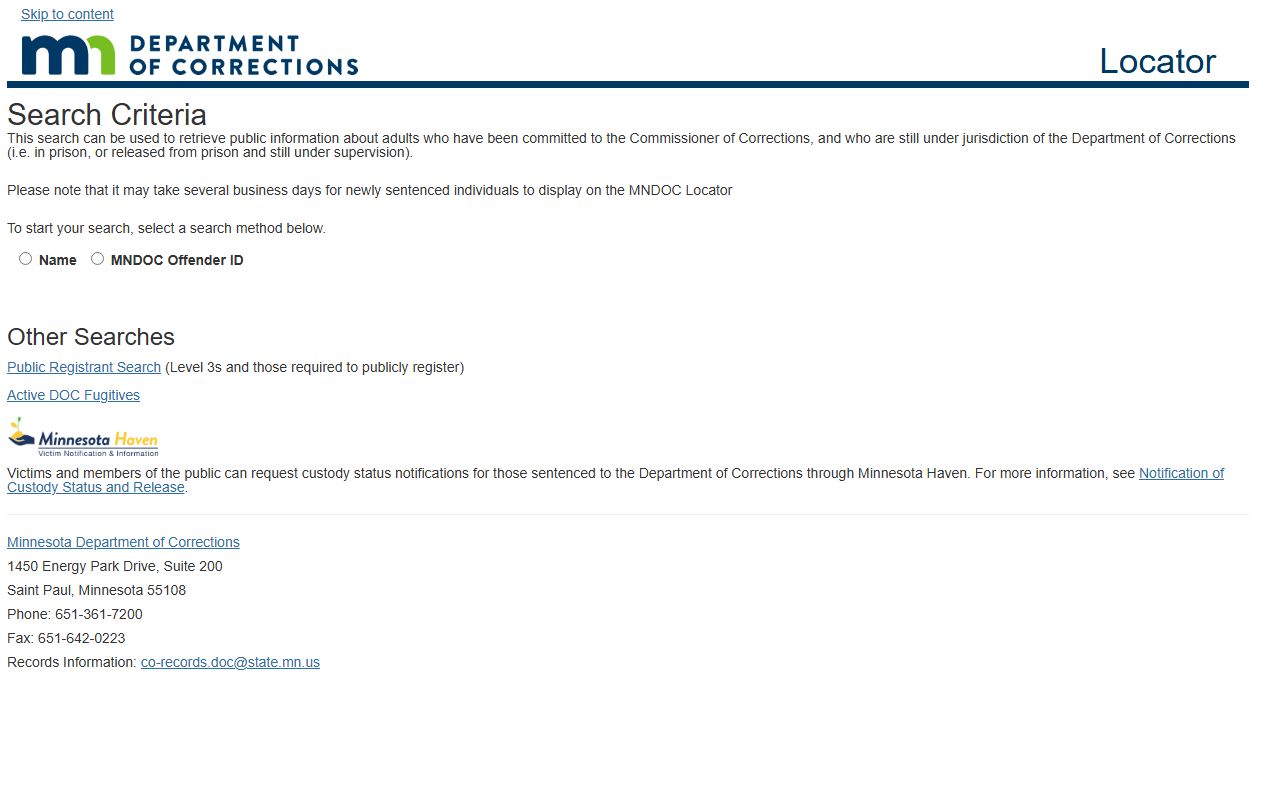
This tool is free and open to anyone. Partial name searches work if you are not sure of the spelling.
County Jail Inmate Population Records
Each of Minnesota's 87 counties runs its own jail through the sheriff's office. County jails hold people who have been arrested and are waiting for court, inmates serving short sentences, and those held on probation or parole violations. The inmate population in any county jail can change every day. Some counties post live jail rosters on their websites. Others let you call or visit the sheriff's office to ask about who is in custody.
Under Minnesota Statutes Chapter 641, county jails must meet state standards for construction, staffing, and inmate care. The law requires sheriffs to keep records of every person booked into the jail. That includes the inmate's name, the offense, the date of commitment, and the date of release. Sheriffs must also send weekly reports to the courts and notify the Bureau of Criminal Apprehension. Minnesota law at Section 641.015 bans private prisons. All jails in the state must be run by the government.
The DOC Search Portal page below shows additional search options for Minnesota inmate population records, including fugitive searches and predatory offender lookups.
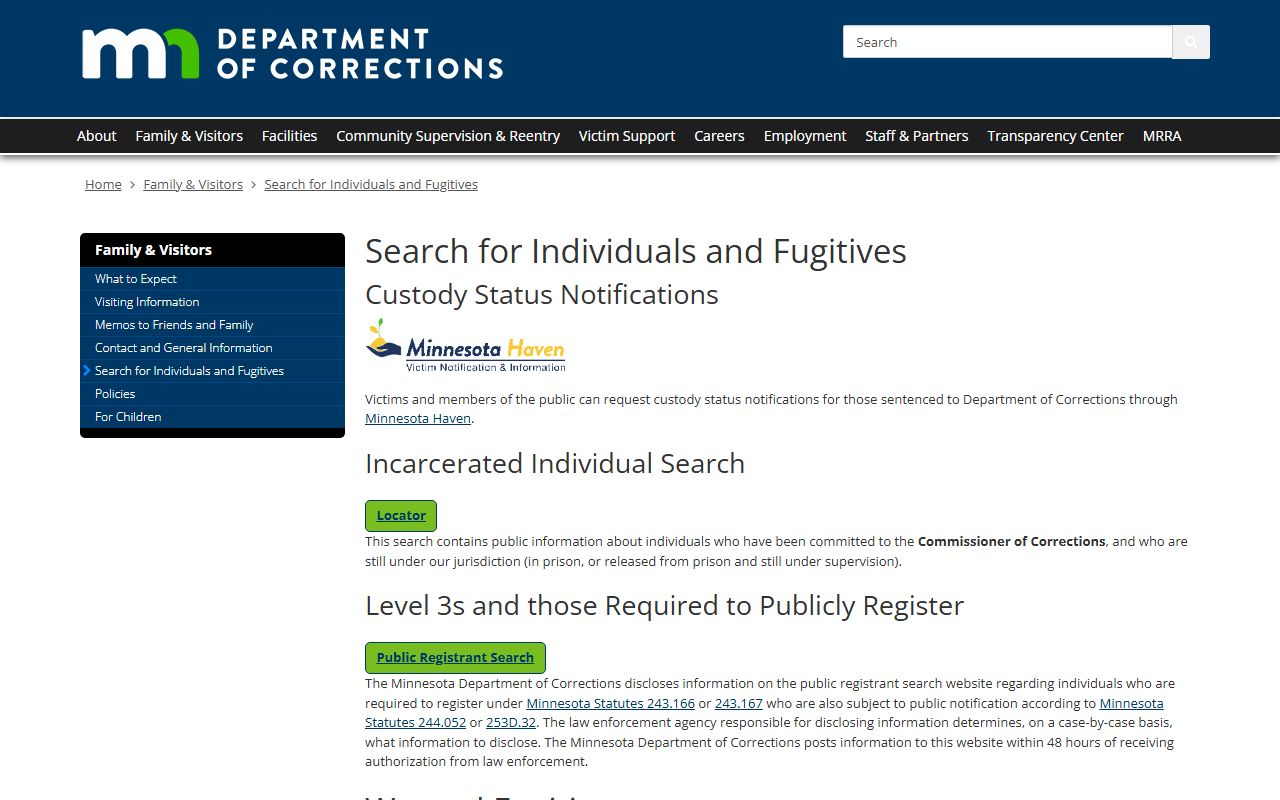
From this page you can access the custody notification system and sign up for alerts about changes in an offender's status.
Jail rosters typically show basic booking data. Names, dates, charges, and court info are all public under Minnesota law. Some counties update their online rosters every 30 minutes. Ramsey County is one example. Their Adult Detention Center roster pulls data from arresting agencies, prosecutors, and state courts. Records stay available while someone is in custody and for five days after release.
Minnesota Inmate Population Data Access
Minnesota has strong public records laws. The Minnesota Government Data Practices Act (Chapter 13) spells out what data the public can see and what stays private. Arrest data is always public. That includes the time, date, and place of arrest, charges, the identity of arresting officers, and where the person is held. Booking records fall into this category too.
Not all inmate data is public though. Medical records, psychological evaluations, and financial info about inmates are private under Section 13.85. Data that could put someone's life at risk or hurt an ongoing investigation is confidential. Once data has been presented in court, it becomes public to the extent it is reflected in court records. The law also lets agencies share certain data with law enforcement or victims for restitution purposes.
The Bureau of Criminal Apprehension shown below handles criminal history records and the predatory offender registry for Minnesota.
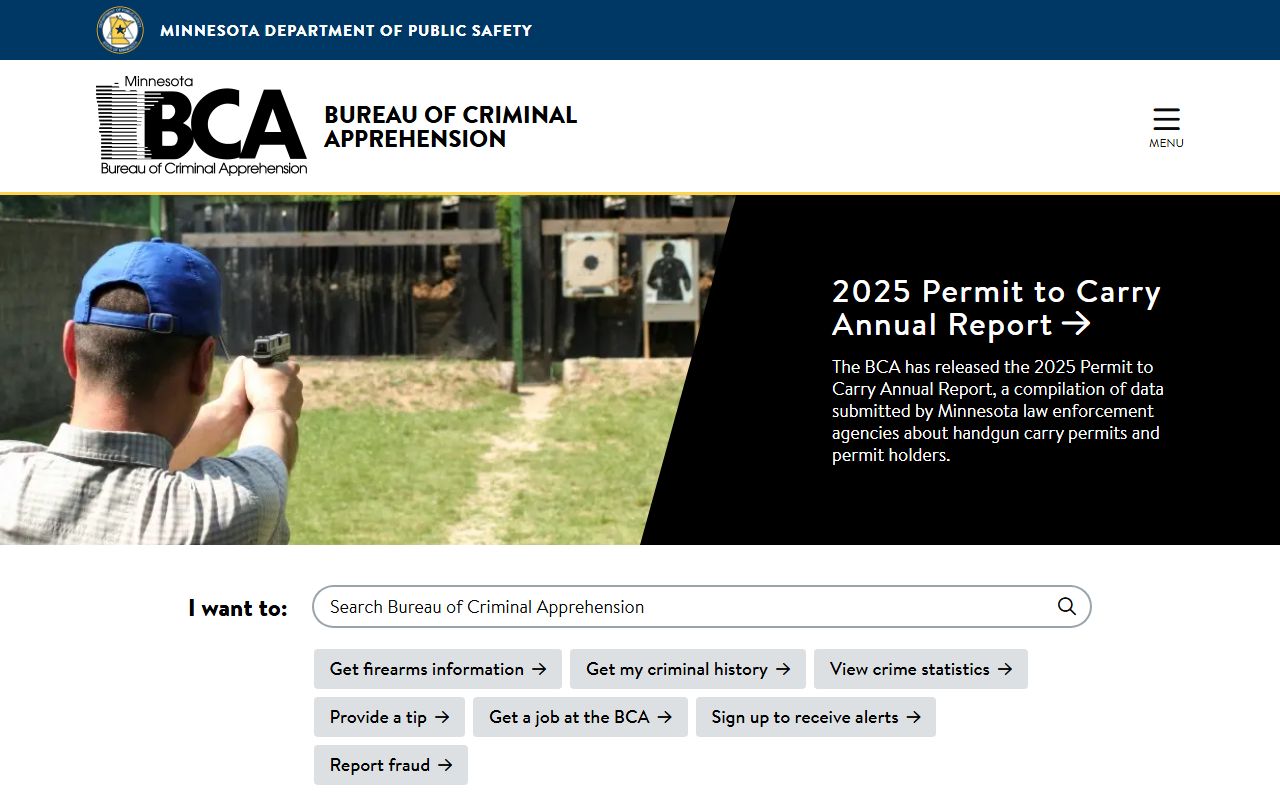
The BCA tip line is 1-877-996-6222. They manage fingerprint records and background check databases statewide.
How to Get Inmate Population Records in Minnesota
You can get inmate population records several ways. Online is the fastest for basic info. The MN DOC Public Viewer is free and works around the clock. For county jail records, check the sheriff's office website for that county. Many post jail rosters online. If the county does not have an online roster, call the sheriff's office and ask.
Written requests work too. Under the Data Practices Act, you can submit a written request to any government agency that holds the records you want. Be specific about what you need. Include the person's name, the county, and any other details you have. The agency must respond but is not required to create new data or answer vague questions. They may ask for payment before making copies. In-person inspection of records is free at most agencies. You just show up and ask to see public data at the custodian's office.
Court records are another way to find inmate information. The Minnesota Judicial Branch runs public access terminals at courthouses across the state. You can look up criminal cases, sentencing details, and probation orders. Some records are available online through the court's electronic case search. Written requests for specific court documents are accepted too.
The Minnesota Judicial Branch website shown below provides access to court records and case information statewide.
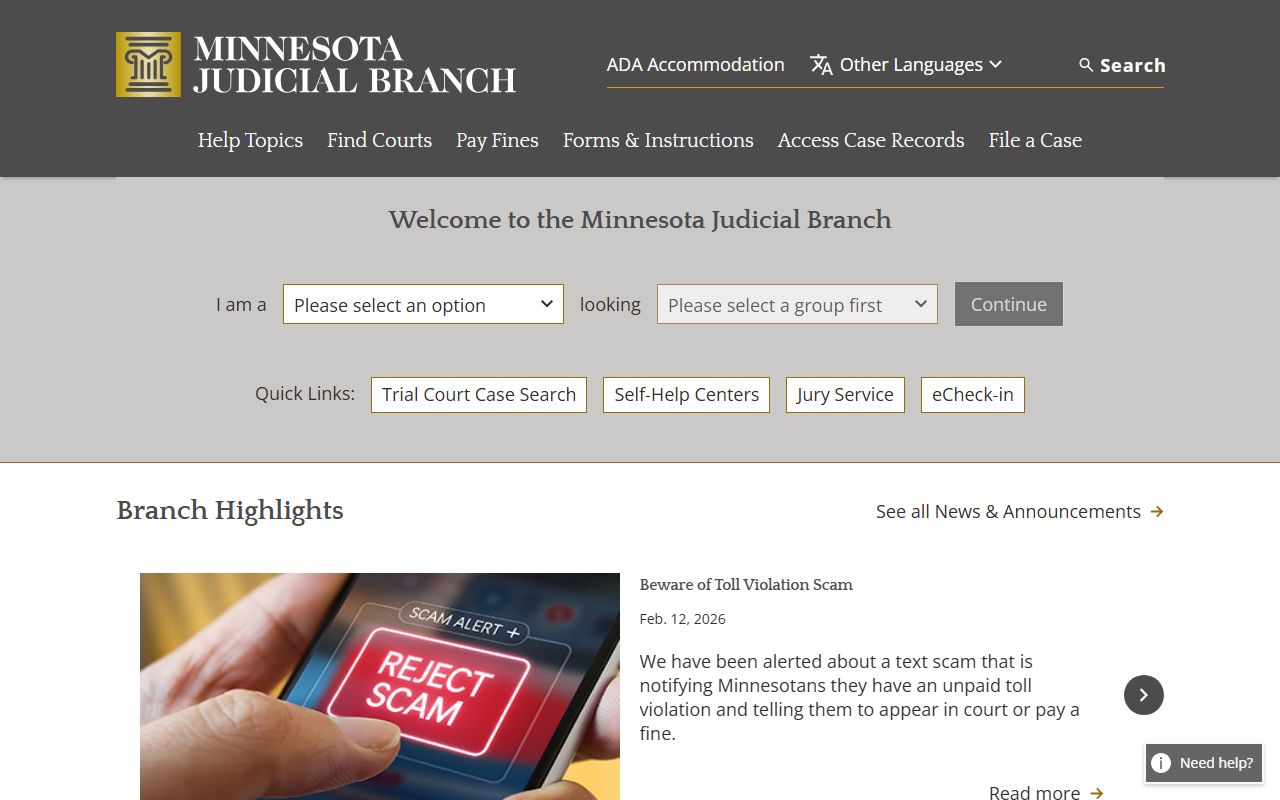
Self-help resources on this site include criminal expungement guides and information about representing yourself in court proceedings.
Minnesota State Correctional Facilities
Minnesota runs nine state correctional facilities through the Department of Corrections. Each one is governed by specific statutes. MCF-Stillwater operates under Minnesota Statute 243.40 and houses adult male offenders. MCF-St. Cloud is the main reception and intake facility for men, governed by Statute 243.75. MCF-Shakopee is the only state facility for women, operating under Statute 243.90. MCF-Rush City houses adult males under Statute 243.94.
The inmate population across these facilities changes as people are sentenced, transferred, and released. The DOC publishes annual reports with population counts, demographic breakdowns, capacity data, and recidivism rates. Under Minnesota Statute 241.016, the DOC must submit a yearly performance report to the legislature. That report covers program outcomes, fiscal data, and how well the system is working at reducing repeat offenses.
The Minnesota Statutes governing the Department of Corrections are shown below on the official Revisor of Statutes website.
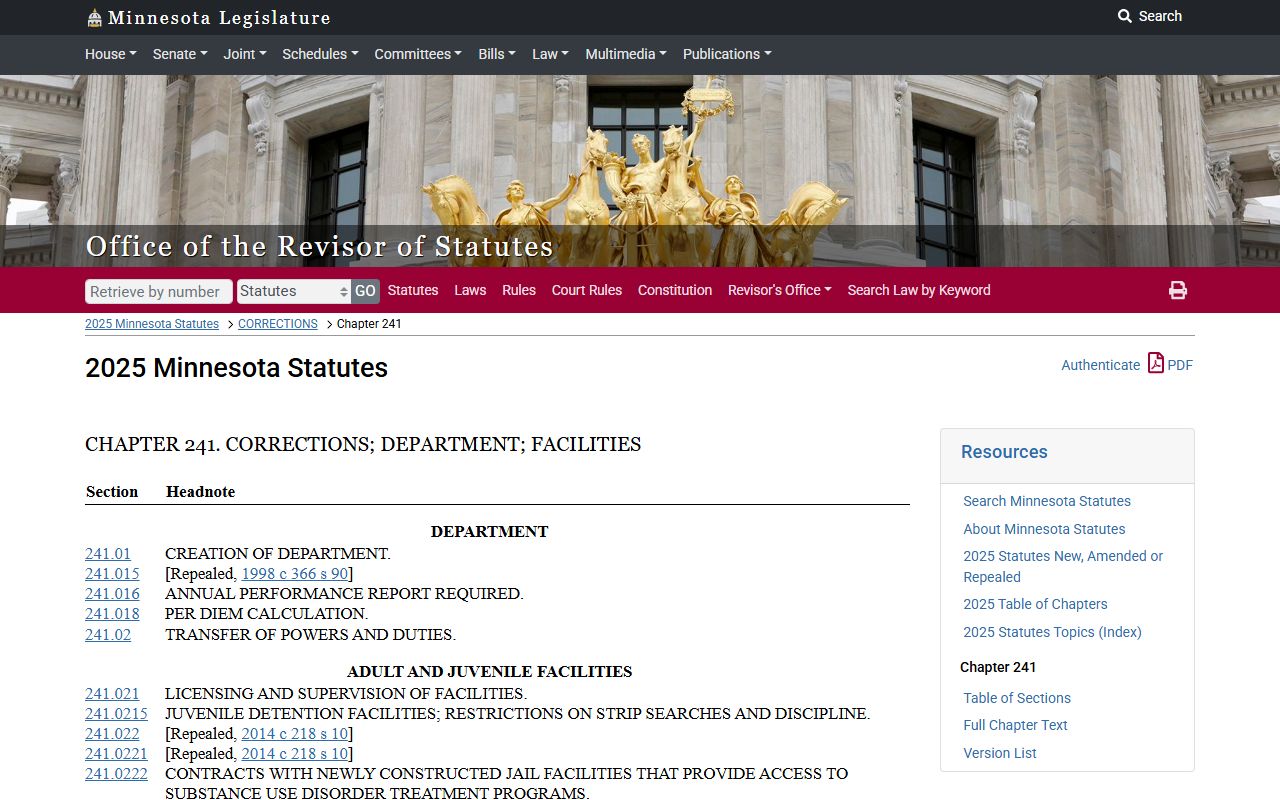
Chapter 241 covers everything from facility licensing to inmate record keeping to the Office of Ombudsperson for Corrections.
The Challenge Incarceration Program at MCF-Red Wing offers an alternative to traditional prison time. This military-style program is for non-violent offenders who meet certain requirements. It runs in phases: boot camp, community work, and supervised release. Under Statutes 244.17 through 244.173, inmates who complete the program can earn early release credits. The Minnesota Sentencing Guidelines Commission sets the rules for how sentences work across all facilities.
Inmate Rights and Public Safety Resources
Minnesota law gives inmates certain rights while in custody. Under Statute 243.205, inmates get notice of their right to vote once they are released. Statute 241.252 requires free communication services for incarcerated persons. Visitors must go through an approval process at state facilities, as laid out in Statute 243.48. Cell occupancy limits are set by Statute 243.53 to prevent overcrowding.
For public safety, the DOC runs a 24-hour tip line at 651-603-0026. Crime Stoppers of Minnesota takes tips at 1-800-222-TIPS (8477). You can also use the Crime Stoppers smartphone app. The DOC Victim Services office helps victims of crime track offender status and file victim impact statements. The BCA maintains the Predatory Offender Registry where you can search for registered offenders by name or location.
The Minnesota Statutes on corrections and sentencing are shown in the screenshot below from the Revisor of Statutes website.
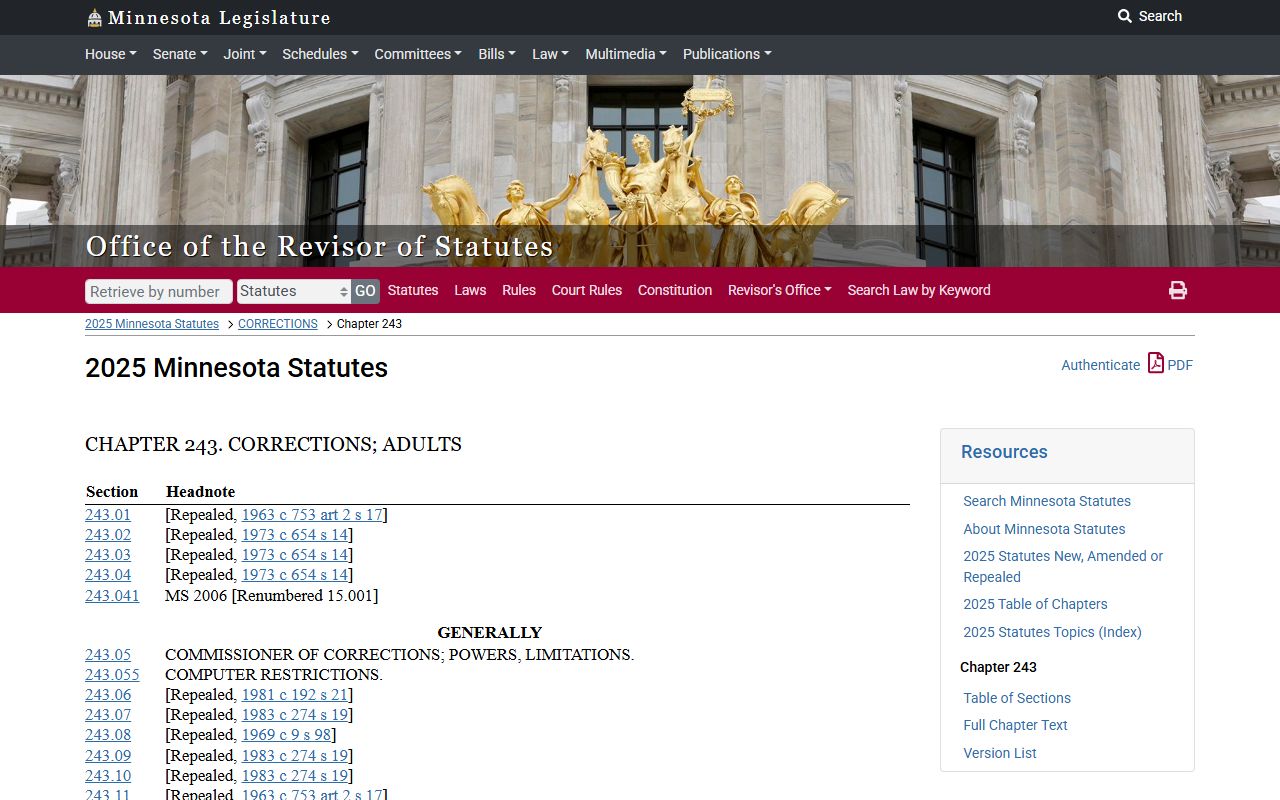
Chapter 243 covers powers of the Commissioner, predatory offender registration, discharge procedures, and facility rules.
Sentencing and Release in Minnesota
How long someone stays in the Minnesota inmate population depends on their sentence. The state uses sentencing guidelines that set presumptive sentences for most crimes. Judges can depart from the guidelines in certain cases, but they must explain why. Chapter 244 of the statutes covers supervised release terms, sentencing hearings, and the rules for departing from guidelines.
After serving two-thirds of their sentence, most inmates move to supervised release for the remaining third. If they violate the terms of release, they can be listed as DOC fugitives. The DOC posts information about active fugitives on its website. Discharge planning is required for both state prisons and county jails. Under Statute 641.155, jails must create discharge plans that connect inmates with community resources before they leave. The DOC also tracks homelessness among released inmates under Statute 241.068 and reports on it each year.
The screenshot below shows Minnesota Statutes Chapter 641, which governs county jails and regional detention facilities.
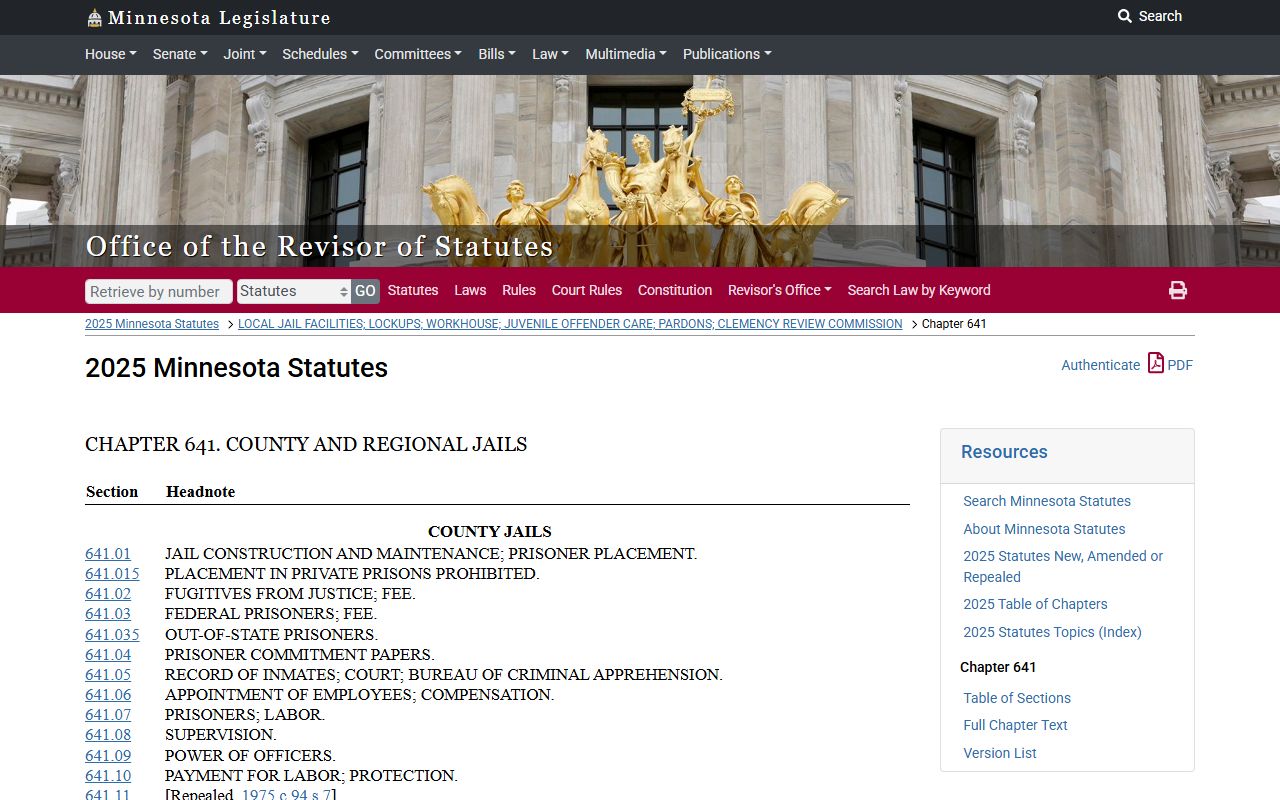
This chapter sets standards for jail construction, prisoner separation, feeding, care, and record keeping requirements.
More Minnesota Inmate Population Resources
Several other state agencies can help you find inmate population data in Minnesota. The Minnesota Data Practices Office can answer questions about your right to access government records. They provide sample request forms and handle complaints if an agency denies your request. This office oversees the Government Data Practices Act and advises agencies on how to classify data. If a sheriff's office or jail turns down your records request, the Data Practices Office is where you file a complaint.
The screenshot below shows the Minnesota Criminal Code on the official Revisor of Statutes website, which defines crimes and their penalties.
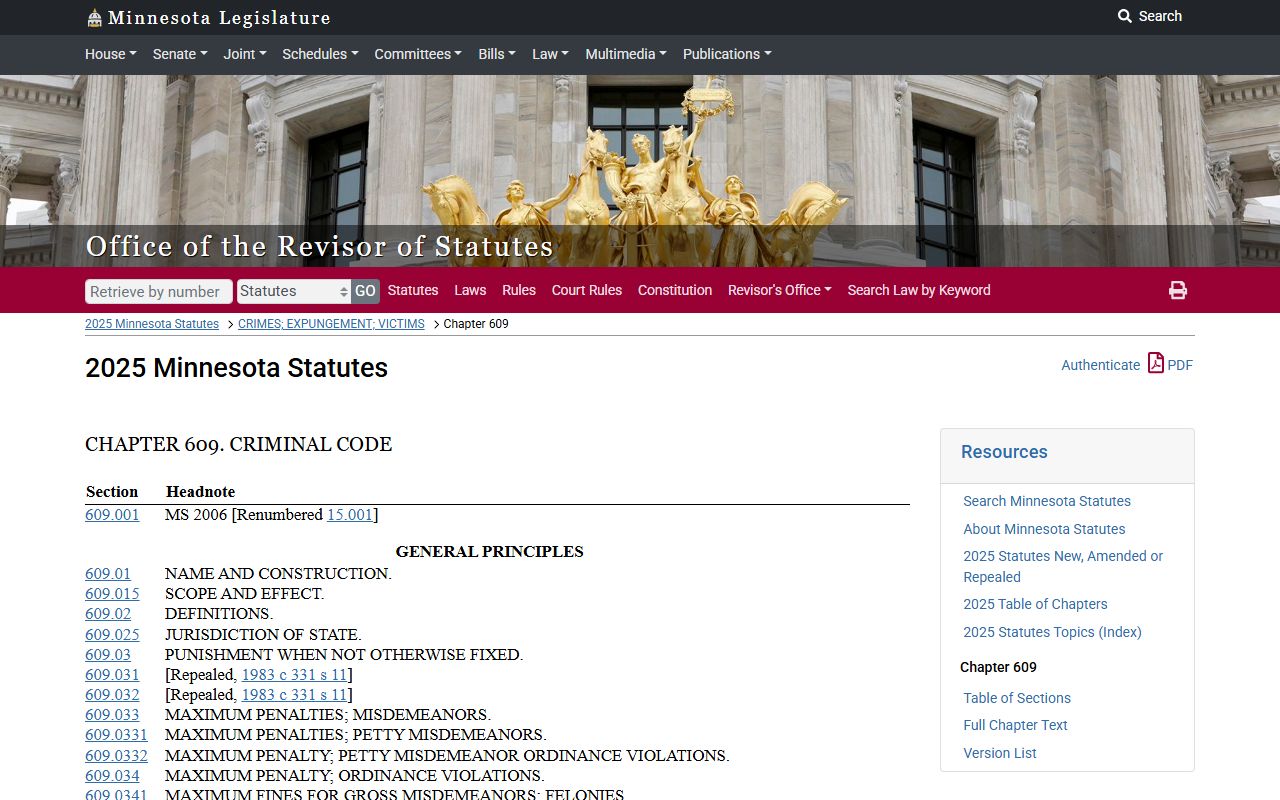
Chapter 609 covers sentences of imprisonment, presentence investigations, and restoration of civil rights after conviction.
The Minnesota Criminal Code (Chapter 609) is where to look if you want to know what a specific charge means or what the possible sentence is. It also covers escape from custody under Section 609.485 and restoration of firearm rights under Section 609.165. The Minnesota State Patrol maintains arrest records at the state level and works with county and local agencies on investigations.
Browse Minnesota Inmate Population by County
Each of Minnesota's 87 counties has a sheriff's office that runs the local jail and keeps inmate records. Pick a county below to find jail roster info, booking records, and local contact details.
Inmate Population in Major Minnesota Cities
City police departments handle arrests, but inmates go to the county jail for booking and detention. Pick a city below to find out which county jail serves that area and how to search their inmate records.