
Search Cook County Inmate Population
Cook County inmate population records are maintained by the Sheriff's Office in Grand Marais, Minnesota. Located in the northeast corner of the state along Lake Superior, Cook County is one of the least populated counties in Minnesota. The jail has limited capacity, so the inmate population stays small compared to metro areas. The Sheriff's Office handles all bookings, custody records, and inmate tracking. State-level tools from the Minnesota Department of Corrections can also help you find Cook County inmates who have been transferred to state facilities.
Cook County Overview
Cook County Jail and Custody
The Cook County jail in Grand Marais is a small facility. It holds a handful of inmates at any given time. The Arrowhead region of Minnesota is remote, and Cook County is at the very tip of it. Grand Marais is the only real town. The rest of the county is mostly forest, lakes, and the Boundary Waters Canoe Area Wilderness. With so few people, the jail does not see heavy use.
But limited capacity creates its own problems. When the jail is full, or when an inmate needs a higher level of custody, the sheriff must arrange a transfer. That usually means sending the person to St. Louis County or Lake County. Transport takes time and costs money. Under Minnesota Statutes Chapter 641, the sheriff has a duty to keep the jail safe and up to code. Even a small jail must meet state standards for food, medical care, and living space. The DOC inspects Cook County's jail on the same schedule as every other county in the state.
Despite its size, the Cook County jail processes real cases. DWIs, assaults, and drug charges come through regularly. Tourist season brings more people into the county and sometimes more arrests. The inmate population may spike during summer months when visitors flood the North Shore and Boundary Waters area.
Inmate Population Search Options
Finding Cook County inmate population data starts with the Sheriff's Office. Call Grand Marais and ask. The staff can confirm if someone is in custody. They can share basic booking information because it is public data under Minnesota law.
State search tools pick up where the county leaves off. The MN DOC Public Viewer shows people committed to the Commissioner of Corrections. If a Cook County offender got a prison sentence, they show up here. The search is free and open to anyone. You can look up inmates by name or DOC ID number. Results show facility, custody status, and release dates.
The DOC Search Portal pulls together several tools. You can look for fugitives, check predatory offender lists, and sign up for custody alerts through the Minnesota Haven system. The Minnesota Judicial Branch website lets you search court cases tied to criminal charges in Cook County. Between these tools, you can piece together a full picture of someone's status in the system.
Public Access to Inmate Population Data
The Minnesota Government Data Practices Act sets the rules. Basic inmate population information is public. Names, charges, and booking dates are open to anyone who asks. Private data, like medical records and certain investigative files, is off limits. The sheriff cannot charge you a fee just to look at public data, but copies may have a small cost attached.
Cook County follows these rules like every other county. The small size of the office means requests might take a little longer to process. There is no online portal specific to Cook County for inmate lookups, which is common for Minnesota's smallest counties. You will need to call or visit in person for current jail roster information.
State Corrections and Cook County
The Minnesota Department of Corrections has authority over county jails through Chapter 241 of the state statutes. The DOC sets minimum standards, conducts inspections, and provides technical support to small counties like Cook. This oversight matters because small jails can struggle with limited budgets and staff. The state helps make sure that all inmates in Minnesota, no matter where they are held, get the basic care that the law demands.
When someone from Cook County gets sentenced to more than a year, they go to state prison. The DOC runs nine correctional facilities across Minnesota. Chapter 243 covers the commitment and release process. Once in the state system, an inmate's records are tracked by the DOC rather than the county sheriff. That is why the MN DOC Public Viewer matters for Cook County inmate population searches. It fills in the gaps that the small county jail cannot cover on its own.
The image below shows the MN DOC inmate locator, a key tool for finding Cook County inmates in state custody.
Visit the MN DOC Public Viewer to search for Cook County inmates held in state facilities.
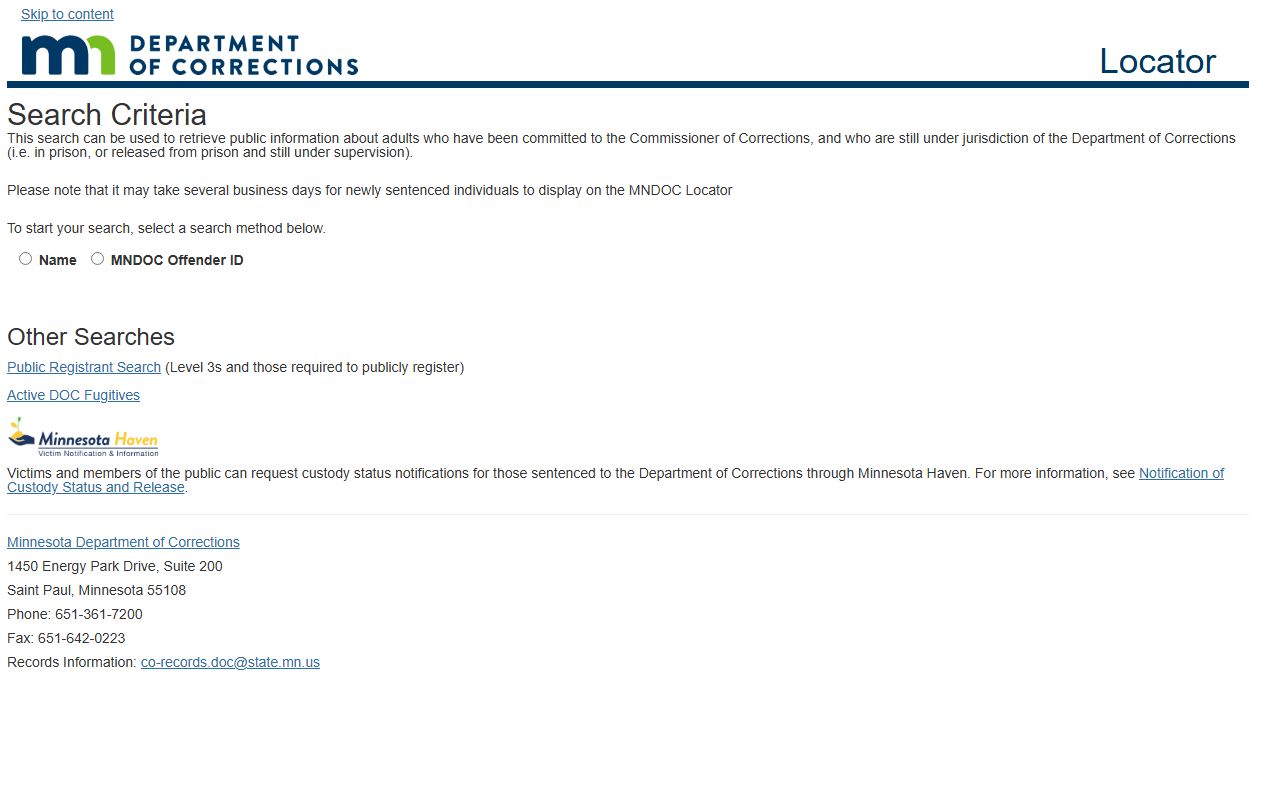
The tool displays facility assignments, projected release dates, and supervision status for inmates from Cook County and all other Minnesota counties.
Criminal Cases in Cook County
Most criminal cases in Cook County go through the 6th Judicial District Court. The courthouse is in Grand Marais. Hearings, arraignments, and trials all happen there. The judge sets bail, which determines whether someone stays in the jail or gets released before trial. Bail amounts in Cook County tend to follow state guidelines, but the judge has discretion.
Under Minnesota Statutes Chapter 609, criminal offenses range from petty misdemeanors to first-degree felonies. The charge level affects where someone serves time. Misdemeanor sentences stay in the county jail. Felony sentences over a year go to state prison. Cook County's inmate population reflects this split. Most people in the jail are there on short-term holds or minor charges. The serious offenders get moved to state facilities after sentencing.
Nearby Counties
Cook County borders just two other Minnesota counties. Due to limited jail space, inmates are sometimes transferred to these neighboring facilities.