
Itasca County Inmate Population
Itasca County inmate population records are managed by the Sheriff's Office in Grand Rapids, Minnesota. This northern Minnesota county covers a large area of forests and lakes, including the headwaters of the Mississippi River. The sheriff operates a comprehensive detention facility that handles bookings from across the county. Itasca County processes arrests from Grand Rapids and surrounding communities, and all jail records fall under the Minnesota Government Data Practices Act. If you want to find someone in custody or check past arrest records, the Sheriff's Office is the main source. Most booking and custody data in Itasca County is public information.
Itasca County Overview
Itasca County Sheriff and Detention
The Itasca County Sheriff's Office runs a comprehensive detention facility in Grand Rapids. The jail handles all local bookings and keeps track of the inmate population around the clock. Staff book new inmates, manage custody records, and process releases. The sheriff also handles patrol across a very large geographic area, one of the biggest in the state by land mass.
Under Minnesota Statutes Chapter 641, the sheriff logs every person booked into the jail. Each entry includes the name, charges, arrest date, and release date. These records make up the Itasca County inmate population data. The sheriff files reports with the Bureau of Criminal Apprehension and other state agencies under Minn. Stat. 641.05. Because Itasca County covers such a wide area, the jail sometimes serves as a regional holding point for smaller neighboring counties that lack their own facilities. All jails in Minnesota operate under public control per Minn. Stat. 641.015.
| Office | Itasca County Sheriff's Office |
|---|---|
| Location | Grand Rapids, MN 55744 |
| Emergency | 911 |
| Website | Itasca County government site |
Search Itasca County Inmate Records
To find inmate population records in Itasca County, start with the Sheriff's Office. Call them in Grand Rapids and give a full name plus date of birth. Staff can tell you if someone is in custody right now. They can pull up past bookings too. For a formal request, send a written data practices request.
State tools expand your search beyond Itasca County. The Minnesota DOC Inmate Locator covers people in state prisons. County jail inmates from Itasca County are not in that system. But anyone who got a felony sentence through the 9th Judicial District may show up in the DOC database after they move to a state facility. The DOC Search Portal tracks fugitives and offers custody status checks through the Haven notification system.
Under the Minnesota Government Data Practices Act, arrest data from Itasca County is public. That covers the time, place, charges, arresting officer, and holding location. The Minnesota Judicial Branch website gives you access to court records from the 9th Judicial District, which includes Itasca County cases.
Itasca County's large geographic area means response times and booking delays can vary depending on where an arrest takes place.
Booking Process in Itasca County
Arrests anywhere in Itasca County lead to booking at the detention facility in Grand Rapids. The intake process includes a search, photograph, and fingerprinting. Staff record all charges and personal details. This information goes into the inmate population log and becomes part of the public record.
Itasca County handles a range of cases. Grand Rapids generates most of the county's arrest volume. The surrounding rural areas contribute fewer bookings but still feed into the system. Drug offenses, DWI, and property crimes are common charge types. Felony cases go through the 9th Judicial District Court. Under Minn. Stat. 641.14, the jail separates inmates by gender and never houses juveniles with adults. The comprehensive nature of the Itasca County facility means it can classify inmates by risk level and assign housing accordingly. This is an advantage that smaller jails in the region do not always have.
Itasca County Data Access
State law governs what inmate data Itasca County can release. Under Minn. Stat. 13.85, corrections and detention data has both public and private parts. Public data from the jail includes names, ages, charges, and arrest dates. Medical records, mental health evaluations, and financial details about inmates stay private.
The Bureau of Criminal Apprehension keeps criminal history records linked to Itasca County arrests. A BCA background check comes with a fee. Court records are public once filed with the 9th Judicial District. Victims of crimes have access to some inmate information that the general public cannot see, mainly for safety and restitution. Itasca County processes data requests within the time frames required by state law.
Jail Services and Programs
Itasca County provides jail services as required by state law. Discharge planning under Minn. Stat. 641.155 means the jail helps inmates prepare for release. Staff connect inmates with housing, treatment programs, and community resources to reduce the chance they return to custody.
The Itasca County inmate population reflects the county's mix of urban and rural activity. Grand Rapids brings steady arrest numbers, while the vast forest and lake areas see fewer incidents. The county's detention facility has enough capacity to handle most of its own needs and sometimes takes inmates from smaller neighboring counties through boarding agreements. Under Minnesota Statutes Chapter 243, the Commissioner of Corrections tracks population data statewide, and Itasca County feeds its numbers into those reports. The jail also works with tribal law enforcement agencies in the area, as parts of the Leech Lake Reservation extend into Itasca County.
Statewide Inmate Search Options
Several state tools supplement Itasca County searches. The Minnesota DOC publishes statistics and annual reports covering all state correctional facilities. These reports help put local jail numbers into a statewide perspective.
Victim Services through the DOC allows victims to register for custody alerts. If someone from Itasca County ends up in state prison, victims get notices about transfers, releases, or escapes. The DOC tip line at 651-603-0026 takes reports on fugitives across Minnesota. Under Minnesota Statutes Chapter 241, the Commissioner of Corrections oversees all state correctional facilities and reports population data to the legislature on a regular basis.
The Minnesota DOC Inmate Locator is the primary state tool for finding people in state correctional facilities.
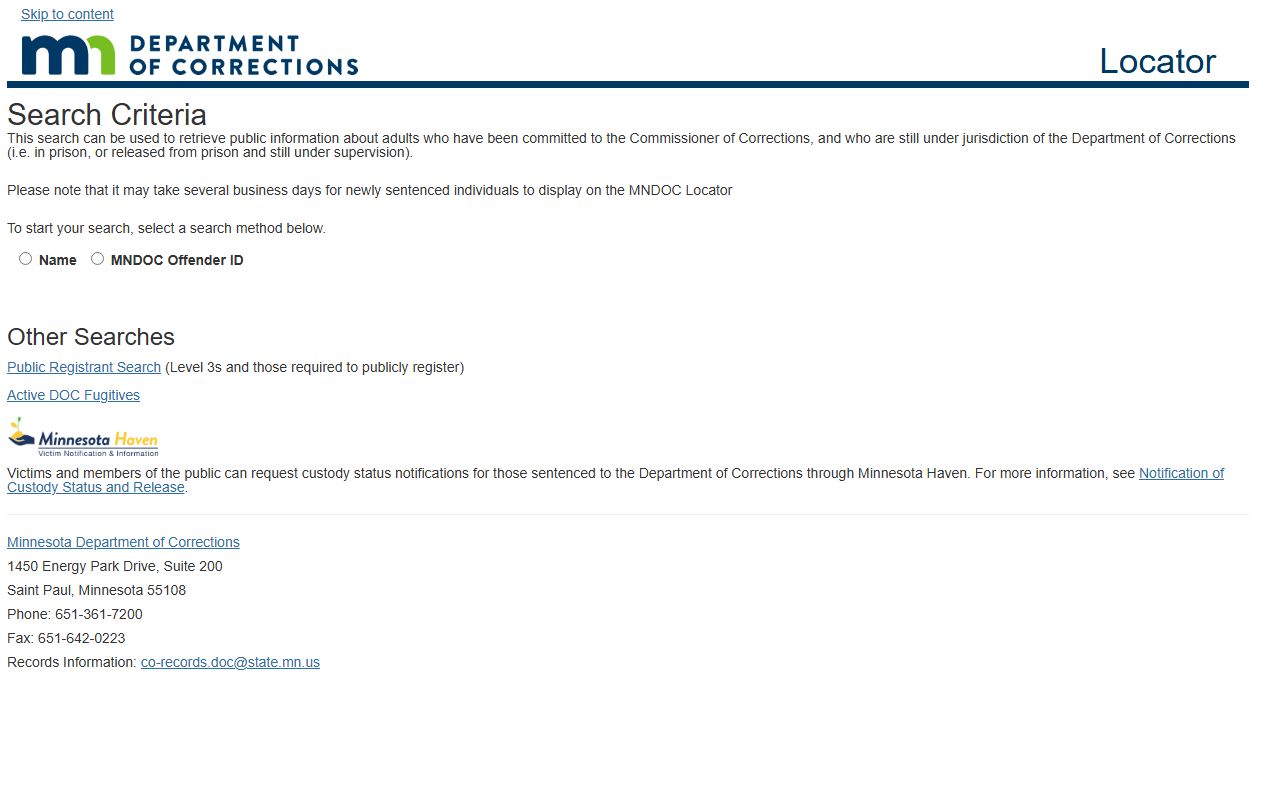
This search covers adults committed to the Commissioner of Corrections. It does not include people held in the Itasca County jail in Grand Rapids.
Nearby Counties
These counties border Itasca County. If an inmate was transferred out of the local facility, the neighboring sheriff's offices can help.